Why Pay More for Handmade 3D Prints?
Last Updated: October 27, 2026
Quick Summary
You pay more for handmade 3D prints because the price covers labor, machine time, finishing, design, and overhead, not just plastic. The gap between a $12 factory figurine and a $45 handmade one is rarely the filament. Finishing and hand work are where most of the premium lives.
Custom 3D printing cost covers six things: material, machine time, labor, finishing, design, and seller overhead.
A printer running a 14-hour job cannot run anything else, so that time has an opportunity cost.
Finishing is the single largest labor line on display pieces.
A print can fail at hour nine of a twelve-hour job, and the seller absorbs that loss.
A transparent seller confirms material and color, print time or size class, finishing steps, and turnaround.
Table of Contents
The Real Reasons Handmade 3D Prints Cost More
A handmade 3D print can cost more because of labor, finishing time, and design work. The answer depends on the product and seller.
Below, we discuss factors to consider when evaluating 3D prints and deciding what matters to you.
Labor and Setup You Never See
Here is what the labor actually covers:
Preparing and slicing the design file
Loading and checking filament
Monitoring the print for failures
Removing supports and cleaning the piece
Sanding, priming, and painting
Packing and shipping
Each step takes real hands-on time. That time is the product.
Material Waste and Failed Prints
Tall, thin, or detailed pieces fail more often than simple shapes, part of why a complex handmade 3D print costs more than a plain one.
What Custom 3D Printing Cost Actually Covers
Custom 3D printing cost covers six things: material, machine time, labor, finishing, design, and seller overhead. Volume squeezes most of those down for mass-produced items. The gap between a $12 factory figurine and a $45 handmade one is rarely the plastic, it is the five other lines on the invoice.
A Transparent Price Breakdown
Cost Component | What It Covers | How It Is Incurred | Why It Varies |
Material | Filament, supports, brims, purge blocks, test prints | Every gram that enters the printer, including the grams that never reach you | Size, infill percentage, and whether the design needs supports |
Machine time | Hours the printer is occupied | A printer running a 14-hour job cannot run anything else, so that time has an opportunity cost | Print height, layer height, and detail level |
Labor | Slicing, setup, monitoring, support removal, cleanup | Hands-on minutes per piece, plus the attention a long print demands | How hands-on the design is and how often it fails |
Finishing | Sanding, priming, painting, assembly, quality check | The single largest labor line on display pieces | How smooth or painted the final look needs to be |
Design | Original modeling, custom edits, test prints, revisions | Hours of CAD work amortized across however many units sell | Whether the file is one-of-a-kind or a licensed model |
Overhead | Packaging, shipping supplies, payment fees, shop software, workspace | Fixed costs spread across every order | Order volume and packaging quality |
Why the Filament Is the Smallest Line
That is why two sellers can quote very different prices for the same model. One runs high infill, a slow fine-layer profile, and hand-finishing; the other runs a fast draft profile and ships straight off the bed. Both are '3D printed', only one carries the labor and machine time that justify a premium.
Failed Prints and Rework Are Priced In
Failed prints are a real cost line, not a marketing story. A print can fail at hour nine of a twelve-hour job, a clogged nozzle, a warped corner, a layer shift, and the filament, electricity, and machine time are gone. The seller absorbs that loss across the pieces that succeed, and complex, tall, or thin-walled designs fail more often.
What a Fair Quote Should Tell You
When you request a quote, a transparent seller will confirm four things: material and color, approximate print time or size class, finishing steps included, and turnaround. If a quote is dramatically below every other seller for the same design, ask what is being skipped, thinner walls, faster layers, no finishing, or no quality check.
Handmade 3D Print Quality: How to Judge It Before You Buy
When evaluating a 3D print, consider its appearance and whether it suits your needs.
Look for real customer photos, not just renders. The FTC guidance on advertising and endorsements makes clear that sellers should show honest images of what buyers actually receive. A shop that posts customer photos is showing you the real thing.
If you want a deeper look at judging fine detail, this guide to high detail 3D printing for miniatures walks through what to check.
3D Print Finishing and Post-Processing: Where the Premium Lives
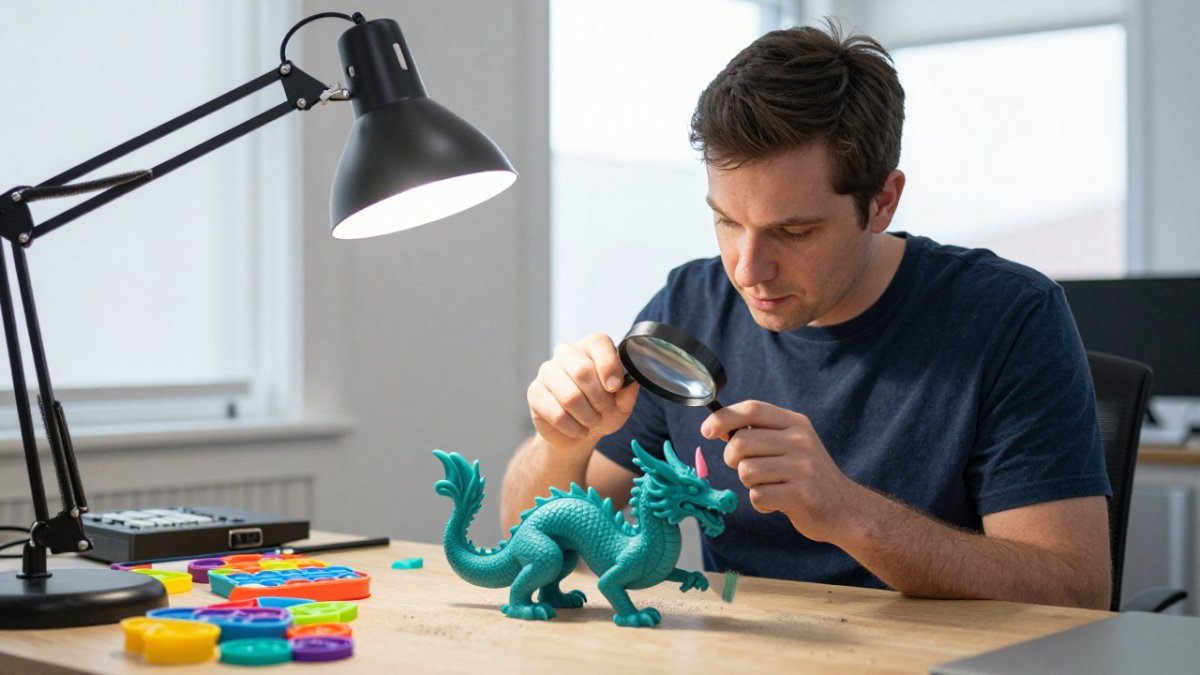
3D print finishing and post-processing is where most of the premium lives. Two prints can come off the same printer and look completely different after finishing: one goes straight from the build plate into a bag, the other through hand steps that can take longer than the print itself.

The Finishing Steps, in Order
A finished display piece typically passes through most of these stages:
Support and brim removal. Clippers and flush cutters remove the structures that held the print up. This is careful work, cut too aggressively and you gouge the surface or snap a thin detail.
Sanding. Progressive grits knock down layer lines and smooth seams. Small pieces need small tools and steady hands; over-sanding rounds off the sharp detail the design was supposed to have.
Filler and primer. Filler primer fills the remaining layer texture and gives paint something to grip. This often takes multiple coats with drying time between them.
Assembly. Multi-part prints are glued, pinned, or fitted together. Joint alignment has to be right, or the finished piece looks crooked.
Painting and detailing. Base coats, washes, dry brushing, and detail work bring the piece to life. This is the most skill-dependent step and the one buyers notice first.
Sealing and quality check. A clear coat protects the finish, and a final inspection catches defects before the piece is packed.
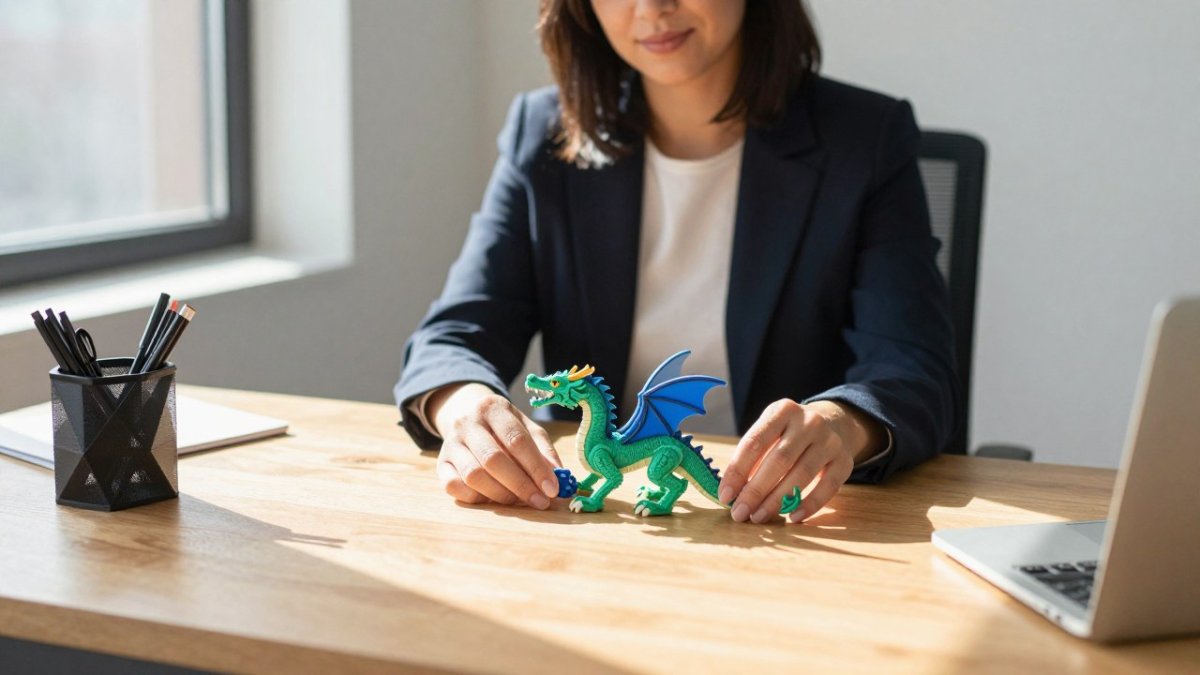
Each step takes time and skill and raises the final quality. You can view our work to see finished examples that demonstrate the finishing quality. A dragon with clean scales and smooth wings took hours of finishing; a cheaper version skipped that work, showing visible layer lines, fuzzy details, and paint that hides rather than highlights the surface.
Why Finishing Is the Hardest Cost to Automate
Finishing also carries risk: paint can run, primer can pool in details, and a piece can be ruined late after most of the labor is spent. Sellers build that rework risk into the price of the pieces that come out clean.
How to Judge Finishing Before You Buy
For a closer look at how to evaluate fine detail, this guide to high detail 3D printing for miniatures walks through what to check.
Prototyping, Small Production Runs, and Economies of Scale
Small-batch production is where handmade shines. A maker can run five of a design and adjust as needed; a factory needs volume to make the math work. That flexibility shows up in the price.
Owning a Printer vs. Buying From a Service
Here is the honest comparison:
If you are weighing ownership against a subscription option, you can explore the print club to see how it compares.
3D Print Order Questions to Ask Before You Pay
These questions can help you evaluate a 3D print before you buy.
Use this checklist:
A seller who answers these clearly is worth your money. A seller who dodges them is not. The Consumer Federation of America's buyer resources offers general guidance on protecting yourself when shopping online.
When Paying More Is Not Worth It
If you are deciding what to consider when buying, this guide to where to buy American-made 3D prints can help.
Frequently Asked Questions
Why do handmade 3D prints cost more than mass-produced items?
The reasons for price differences between 3D prints and mass-produced items depend on the product and seller.
How can I tell if a 3D print is high quality before ordering?
When evaluating a 3D print, consider whether its appearance and features suit your needs.
Is a custom 3D print worth the extra cost?
Whether a custom 3D print is worth the cost depends on what you value. Check Carolina Printworx3D's website for current prices or a quote.
What should I ask before ordering a 3D print?
Before ordering, review the product information and contact Carolina Printworx3D with any questions about the item.
The real question is not whether handmade costs more. It is whether the piece you get is worth it. At Carolina Printworx3D, we print our own pieces and stand behind the detail, the joints, and the finish. Our collection spans articulating prints, dragons, fidget toys, and anime-inspired collectibles, all made with care. Get started with Carolina Printworx3D and see the difference handmade quality makes.
Join
Add carolinaprintworx3d.com as a preferred source on Google →
Comments