Where to Buy American-Made 3D Prints in 2026
Last Updated: October 24, 2026
Quick Summary
American made 3d prints are available through direct-to-consumer services like Carolina Printworx3D, print-on-demand marketplaces with domestic makers, and independent makers nationwide. Direct services offer transparency by handling design, production, and fulfillment in-house, while custom services let you commission one-of-a-kind prints to your specifications.
Carolina Printworx3D is an American-owned company based in North Carolina that handles design, production, and fulfillment in-house.
Verify domestic production by asking five questions: where printing happens, whether the company owns its printers, material sourcing, who handles post-processing, and whether they provide a certificate of origin.
Material volume, print time, resolution, and post-processing are the four variables that drive the price of a finished print.
Simple catalog items typically ship within a few business days to two weeks; custom or multi-part work often takes two to four weeks.
Inspect prints on arrival for layer lines, dimensions, articulation, defects, and completeness within the return window, usually 14-30 days for defects.
Table of Contents
Understanding Your Options: Finished Prints vs. Files vs. Printers
Where to Buy American-Made 3D Prints Online
Direct-to-Consumer Print Services
Print-on-Demand Marketplaces with Domestic Makers
Independent Makers and Local Sellers
Custom 3D Printing Services USA: Getting Exactly What You Need
How to Order Custom 3D Prints Online: The Process Explained
Submitting Your Model and Getting a Quote
Choosing Materials and Print Settings
Delivery and Quality Checks
Best 3D Printed Fidget Toys and Popular Categories
How to Verify American-Made: What Matters and What to Ask
Start with the federal baseline
The five questions that actually settle it
Red flags and green flags
Verify the business, not just the claim
What "verified" realistically means for a small shop
Quality, Pricing, and Delivery: What to Expect
What drives the price of a finished print
Rough price ranges to anchor a quote
How to judge quality before delivery
Inspect on arrival: a buyer's checklist
Returns, reprints, and buyer protections
Delivery timelines
Conclusion: Finding the Right American 3D Print for Your Needs
Frequently Asked Questions
Understanding Your Options: Finished Prints vs. Files vs. Printers
When looking for where to buy american made 3d prints, the first decision isn't the vendor, it's what you need.
Buy finished 3D prints ready to use, designed, printed, and quality-checked by someone else.
Or buy a 3D printer and learn from scratch, the biggest time and financial investment, but unlimited possibilities.
Most people seeking american made 3d prints fall into the first category: finished, high-quality prints without the learning curve.
Where to Buy American-Made 3D Prints Online
Direct-to-Consumer Print Services
Direct-to-consumer services design, print, and ship products themselves, meaning shorter supply chains and clearer accountability.

They maintain their own printers and control every step of production, no middleman markup, no mystery about origin.
Carolina Printworx3D operates this way, an American-owned company based in North Carolina that handles design, production, and fulfillment in-house. You can shop for 3D prints at Carolina Printworx3D to see their full catalog of articulating prints, dragons, fidget toys, and anime-inspired collectibles.
The advantage is transparency: you can contact the maker directly if something arrives damaged, and you know the production location, materials, and processes.
Print-on-Demand Marketplaces with Domestic Makers
Print-on-demand platforms connect customers with independent makers nationwide. The marketplace handles the transaction; printing happens at distributed locations.
Quality varies by maker, some run professional facilities, others work from home studios.
The benefit is selection, thousands of unique designs. The challenge is verification: research each maker's reviews, materials, and production standards before ordering.
Independent Makers and Local Sellers
Independent makers sell through their own websites, social media, or local marketplaces, typically individuals or small teams.
Quality depends entirely on the maker's skill and equipment, with no standardized quality control.
The advantage is customization, a dice tower with your campaign's logo, or a miniature of your character. The disadvantage is inconsistency in delivery, communication, and returns.
Custom 3D Printing Services USA: Getting Exactly What You Need
Custom 3D printing services let you submit your own design or work with a designer to create something unique.
Unlike a catalog purchase, you're commissioning a one-of-a-kind or limited-run product built to your specifications.
Carolina Printworx3D accepts custom orders. You can contact them directly through their profile to discuss what you need, whether that's a personalized fidget toy, a custom dice tower, or an anime figure with modifications.
You submit your design or describe what you want; the service quotes based on complexity, material, size, and production time; you approve, they print and ship.
Custom orders cost more due to one-off setup, but the result is tailored exactly to your needs.
How to Order Custom 3D Prints Online: The Process Explained
Submitting Your Model and Getting a Quote
Start with a clear idea: do you have an STL file, or are you describing a concept and need design help?
If you have a file, submit it with size, material preference, and quantity. The service reviews printability, thin walls collapse, small details disappear, joints won't articulate.
They flag issues, suggest fixes, then quote based on material volume, print time, and finishing.
Choosing Materials and Print Settings
Material affects cost and function: resin is higher-detail but brittle, nylon is durable and flexible, standard plastics are affordable and versatile.
Higher resolution costs more but produces finer details; lower resolution is faster and cheaper but shows layer lines.
Choose by use case: a fidget toy needs durable material, a display miniature prioritizes detail, and a replacement part needs material matching the original.
Delivery and Quality Checks
Reputable services inspect for defects, test joints, verify dimensions, and finish the print as needed.
Shipping varies: a simple order might ship in a week, complex custom work in three to four weeks. Ask upfront if you have a deadline.
Inspect on arrival for layer lines, cracks, or dimensional issues. If something's wrong, contact the service within the return window (usually 30 days).
Best 3D Printed Fidget Toys and Popular Categories
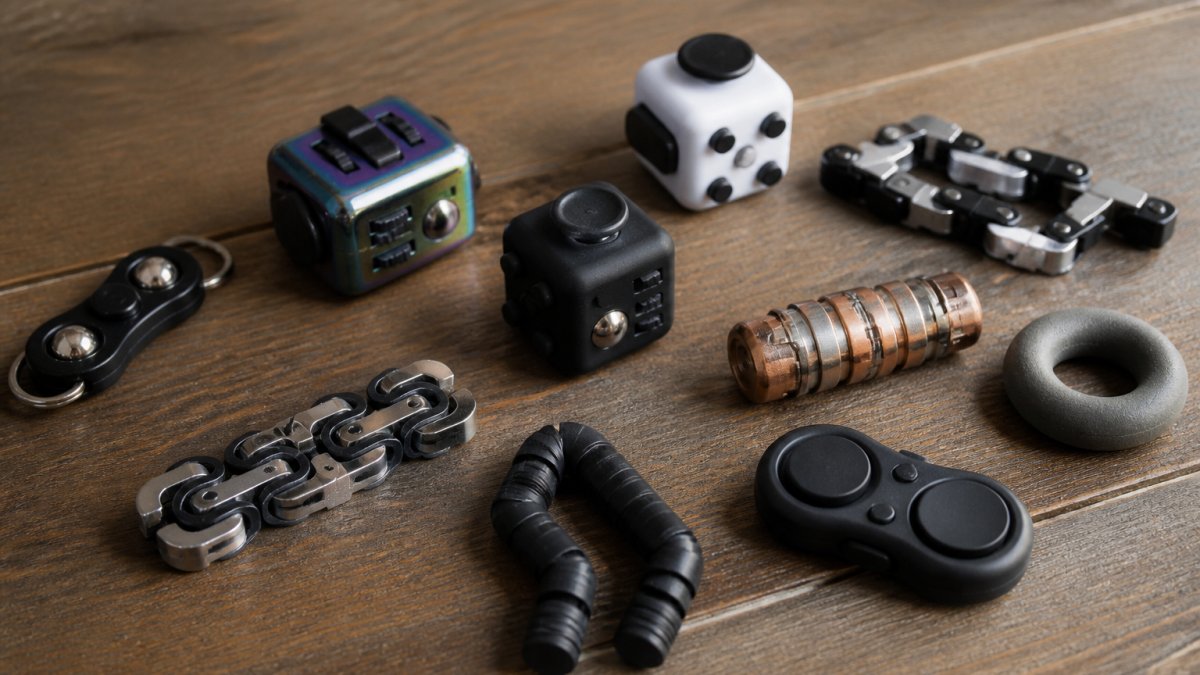
Fidget toys are one of the most popular 3D print categories, affordable, compact, and genuinely useful for focus and stress relief.
Common designs include spinners, pop-its, articulating chains, and textured sensory toys. 3D printing enables custom shapes, unique mechanisms, and personalized designs traditional manufacturing can't match.
Carolina Printworx3D offers fidget toys in their catalog, and you can explore their full selection to see what appeals to you. For deeper guidance on selecting the right fidget toy for your specific needs, discover the best fidget toys for adult focus to compare options and understand what features matter most.
Beyond fidgets, popular 3D print categories include:
Dice towers and gaming accessories for tabletop RPGs
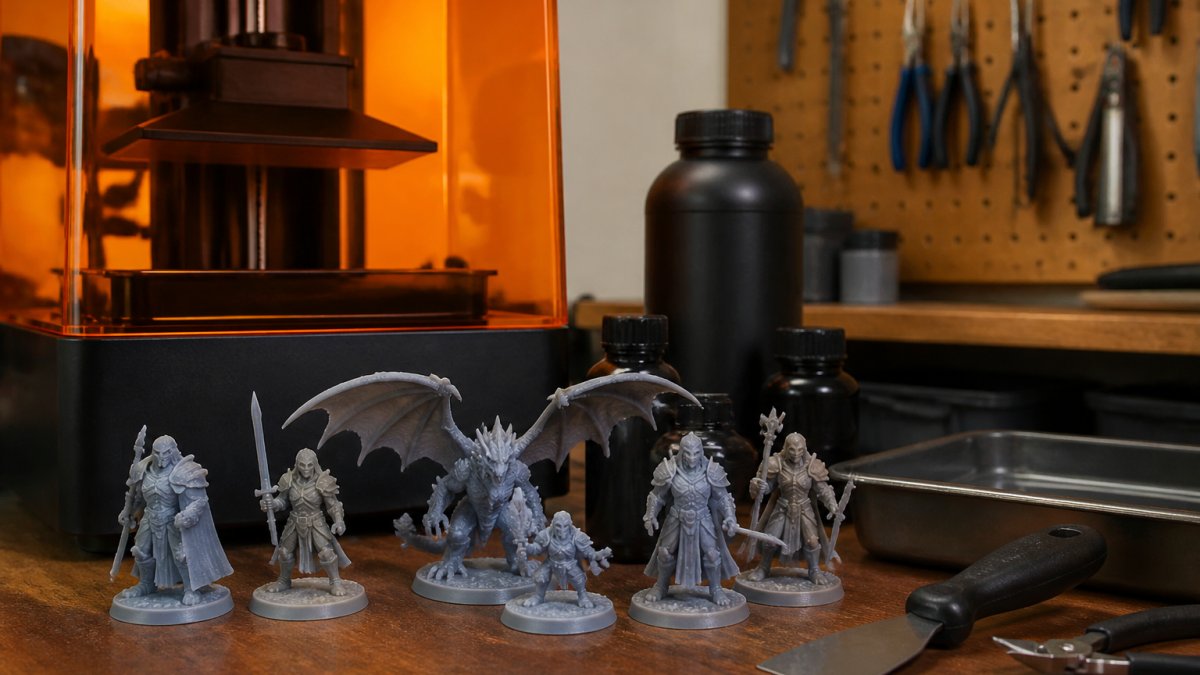
Articulating dragons and fantasy figures for collectors
Anime-inspired miniatures and collectibles
Each category has different quality requirements. Gaming pieces need precise dimensions. Display items prioritize visual detail. Functional parts need durability and dimensional accuracy.
How to Verify American-Made: What Matters and What to Ask
"American-made" isn't a single legal term. It can mean designed here, printed here, assembled here, or merely sold by a U.S. business. Your goal is to separate a print actually manufactured domestically from one imported and resold. Treat this section as your verification checklist.
Start with the federal baseline
The Federal Trade Commission (FTC) enforces "Made in USA" claims (the FTC). Under its Made in USA Labeling Rule, a product marketed as "Made in USA" generally must be "all or virtually all" made in the United States, final assembly and processing domestic, with no more than negligible foreign content (the FTC). "Made in USA" is a strong claim; "Printed in the USA" or "Designed in the USA" is narrower.
Watch Out "Assembled in USA," "Designed in USA," and "Made in USA" are different claims. Only the last one carries the FTC's "all or virtually all" standard. If a listing is vague, ask which claim they are making and where the printing physically happens.
The five questions that actually settle it
Ask these in writing so you have a record:
Where is the print physically produced? Look for a street address or at least a city and state for the production facility, not just a P.O. box or a fulfillment center.
Do you own or operate the printers? A company that owns its equipment controls production. A company that forwards orders to an overseas bureau does not.
What materials do you use, and where are they sourced? Resin and filament are often imported even when printing is domestic. Ask whether the material itself is domestic if that matters to you.
Who handles post-processing and quality control? Sanding, curing, assembly, and inspection are part of manufacturing. If those steps happen abroad, the "made here" claim weakens.
Can you provide a certificate of origin or a production statement? Reputable domestic shops can usually supply a simple written statement describing where the item was made.
Red flags and green flags
Red flags:
The listing says "American-owned" but never says where printing happens.
The company cannot name a production city or state.
Shipping times are implausibly long for a domestic item (a red flag for drop-shipping from overseas).
Green flags:
A specific production location is stated on the product page (for example, "printed in our North Carolina shop").
The company describes its own equipment, materials, and finishing process.
Customer reviews mention fast domestic shipping and direct communication with the maker.
Verify the business, not just the claim
Cross-check public records: state secretary of state registries show registration and longevity, the Better Business Bureau (BBB) publishes complaint histories, and the FTC and Consumer Financial Protection Bureau complaint databases surface patterns. None prove domestic production alone, but together they show whether the business is real, established, and responsive.
Pro Tip Save the product page and your email exchange before you order. If a "Made in USA" claim later turns out to be false, the FTC accepts reports at ReportFraud.ftc.gov, and your saved records make the report actionable.
What "verified" realistically means for a small shop
A small domestic print shop rarely carries formal certification, that's normal. What you can expect is a clear, consistent answer: a production location, a description of in-house equipment, and willingness to put the claim in writing.
Carolina Printworx3D is one example of the direct-to-consumer model this checklist is designed to test: an American-owned company that states it handles design, production, and fulfillment in-house.
Quality, Pricing, and Delivery: What to Expect
This section breaks down what drives the price of a finished print, how to read quality before and after delivery, and what buyer protections to confirm before you pay.
What drives the price of a finished print
Four variables explain almost every quote:
Material volume. Price scales with the amount of filament or resin used. A small fidget toy uses a few grams; a large dice tower or articulating dragon can use hundreds of grams. Material is usually the largest single cost line.
Print time and process. FDM (filament) printing is generally cheaper per part for larger, simpler objects. Resin (SLA/DLP) printing costs more per part but delivers finer detail, which is why miniatures and highly detailed collectibles are usually resin.
Resolution and layer height. Finer layer heights (for example, 0.1 mm versus 0.2 mm on FDM) take longer and cost more but reduce visible layer lines. Resin printing typically achieves finer detail than FDM at comparable sizes.
Quantity matters too: one-off custom work carries setup labor that a batch spreads across units, so per-unit cost drops as quantity rises.
Rough price ranges to anchor a quote
Exact prices vary by shop, but these ranges reflect common U.S. market patterns and help sanity-check a quote:
Key Takeaway Ask for a quote that itemizes material, print time, and finishing. A quote that lists only a single total gives you no way to compare shops or spot an inflated line item.
How to judge quality before delivery
Ask before ordering:
What layer height and process will you use? This tells you how visible layer lines will be.
What material, and what are its properties? PLA is rigid and affordable but softens in heat (for example, a hot car). PETG is tougher and more heat-resistant. Resin offers fine detail but is more brittle. Nylon is durable and flexible. Match the material to the use, a fidget toy that flexes repeatedly needs toughness; a display miniature prioritizes detail.
What tolerances do you hold? For functional or articulating parts, ask what dimensional tolerance the shop works to. Tighter tolerances cost more but matter for parts that must fit together.
Inspect on arrival: a buyer's checklist
Check on arrival, within the return window:
Layer lines and surface finish, consistent with the resolution you paid for?
Dimensions, does it match the stated size? Use calipers for functional parts.
Articulation, do joints move freely without cracking or binding?
Defects, look for layer shifts, stringing, warping, uncured resin, or cracks.
Completeness, all parts and accessories present?
Photograph any issue immediately; most shops require photos with a claim.
Returns, reprints, and buyer protections
Return policies for custom and made-to-order prints vary widely, and many shops limit returns on personalized items. Before you pay, confirm in writing:
The return window (commonly 14-30 days for defects, though custom items are often final sale).
Whether the shop offers a reprint for defects rather than a refund, common for made-to-order prints.
Who pays return shipping on a defective item.
Watch Out If a shop refuses to put its return and reprint policy in writing, treat that as a quality signal in itself. Reputable makers stand behind their work and will confirm the policy before you order.
Delivery timelines
Domestic production plus domestic shipping is usually faster than importing. Simple catalog items commonly ship within a few business days to two weeks; custom or multi-part work often takes two to four weeks. Get an estimated ship date in writing, and confirm whether it's for shipping or delivery.
These four factors determine the cost of a finished 3D print and help you understand what you're paying for.
Cost Driver | Impact on Price | Notes |
Material volume | Largest single cost | Small fidget toy uses few grams; large dragon uses hundreds |
Print time and process | Medium impact | FDM cheaper for large objects; resin costs more but finer detail |
Resolution and layer height | Medium impact | Finer layers (0.1 mm vs 0.2 mm) take longer and cost more |
Post-processing and finishing | Variable | Sanding, curing, painting can multiply raw print cost several times |
Conclusion: Finding the Right American 3D Print for Your Needs
Finding high-quality american made 3d prints requires knowing what you need, where to look, and how to verify domestic-production claims.
Whether you want fidget toys for focus, articulating dragons for your collection, or custom dice towers for your gaming table, american made 3d prints give you quality, uniqueness, and the satisfaction of supporting domestic manufacturing.
Frequently Asked Questions
How can I verify if a 3D print is made in the USA?
Ask the seller directly where their 3D prints are manufactured and request proof of domestic production. Legitimate American-made 3D printing services will clearly state their production location, often highlighting their domestic facility. Check for transparency about their equipment location, team, and manufacturing process. Many U.S.-based makers proudly display their location and will provide detailed answers about their operations. Verify through their website, customer reviews, and direct communication before purchasing.
What should I look for when choosing a custom 3D printing service?
Evaluate custom 3D printing services USA based on material options, print resolution, turnaround time, and customer service responsiveness. Check if they accept your file format (STL files are standard), offer a quote process, and provide samples or portfolio work. Read customer reviews for quality consistency, especially regarding layer finish on detailed pieces and joint durability on articulated prints. Confirm their quality guarantee and return policy before committing to a custom order.
What are the benefits of buying 3D printed items from domestic shops?
Buying from domestic American-made 3D print shops supports local manufacturing and typically offers faster shipping and better customer service. You gain direct access to makers who can discuss custom modifications, answer technical questions, and stand behind their work. Domestic producers often maintain stricter quality control, provide clearer communication about materials and print settings, and offer more flexible customization options than overseas alternatives. Supporting local makers also ensures your purchase supports jobs and businesses within the country.
Can I get personalized or custom orders for specific designs like campaign logos?
Yes, most custom 3D printing services USA accept personalized orders. You can submit your own STL file or design concept, and the service will provide a quote based on size, material, complexity, and print quantity. How to order custom 3D prints online typically involves uploading your file, specifying dimensions and material preferences, and confirming the quote before production begins. Many American makers specialize in bespoke work for tabletop gaming, collectibles, and office decor, so discuss your specific requirements directly with the service.
Finding the right american made 3d prints doesn't have to mean settling for generic catalog items or waiting weeks for uncertain results. Carolina Printworx3D delivers high-quality 3D printed products, from articulating prints and dragons to fidget toys and anime collectibles, all designed and produced right here in North Carolina. Join our community and discover why so many collectors, gamers, and fidget enthusiasts choose American-made quality over mass-produced alternatives.
Join
Add carolinaprintworx3d.com as a preferred source on Google →
Comments